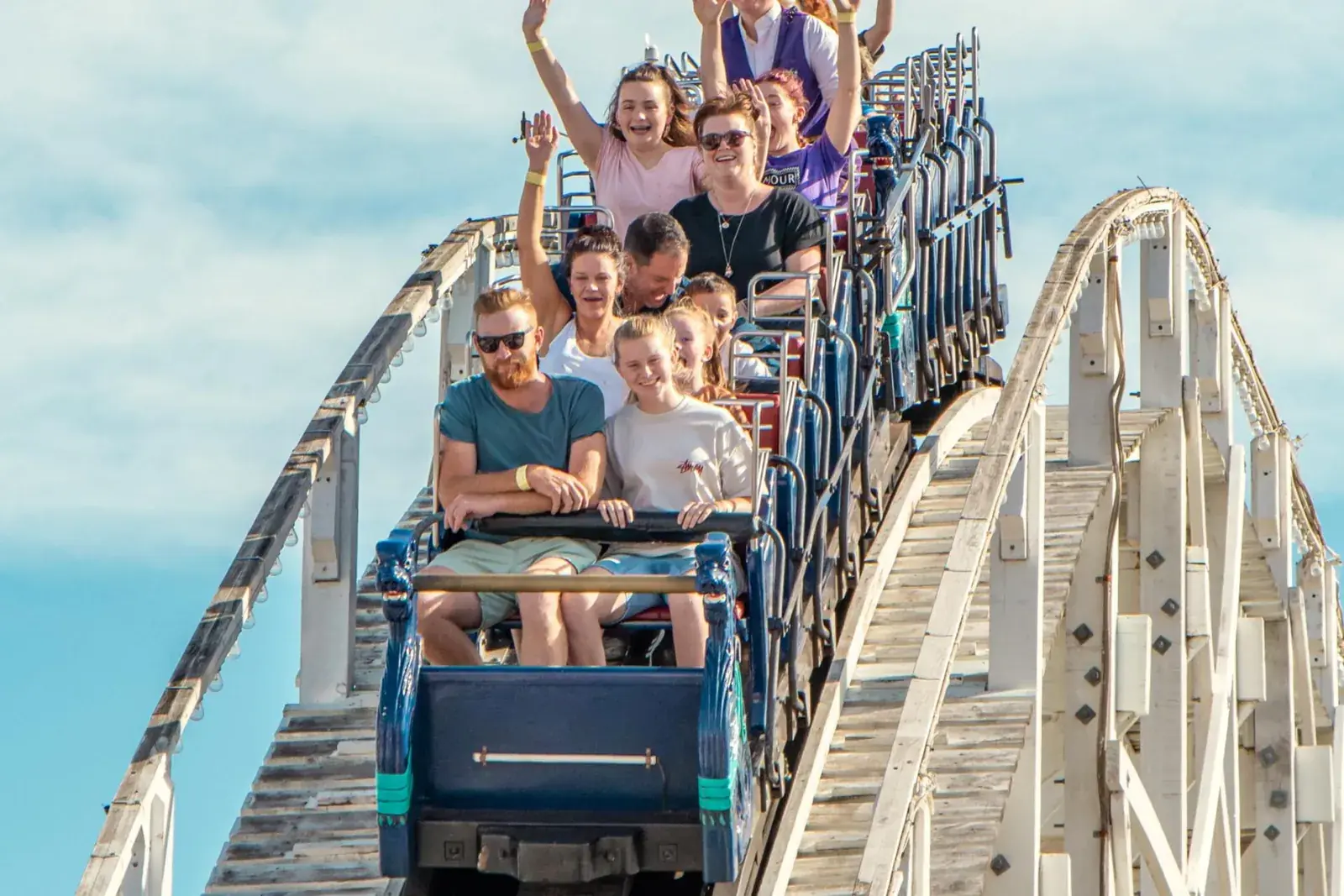
Theme park photography has been around almost as long as the rides. Early cameras couldn’t take high-speed shots, but faster shutter speeds made on-ride photos possible, and with them the wide eyes and wind-swept faces we all know. Today, a photo of your family at the most intense moment of a rollercoaster is a staple souvenir of a day out.
The biggest operators know how valuable photos are. Disney takes more than 100,000 photos a day for its PhotoPass guests, who can buy images from roaming photographers and on-ride cameras in one place. It’s a major revenue driver, built right into the experience.
Most attractions don’t have the resources to build their own digital photo system. For many, selling photos at a kiosk after the ride is still the default. It works, but it falls short for guests in a few important ways.
The current state of theme park photo systems
Everyone knows how it goes. You ride, a camera snaps you at the big drop, and on the way out you see your photo on a screen, laugh at your face and decide whether to buy a print or a digital copy.
It’s part of the theme park experience. But for digitally native guests, it doesn’t meet expectations:
- It’s time-sensitive. With photos only available at the kiosk straight after the ride, guests feel they have to buy now or lose the moment. That adds pressure to what should be a fun part of the day.
- It causes crowding. On busy days, the photo sales area gets congested. It disrupts the flow of the day and eats into ride time, which is already limited by queues.
- It’s scattered. Photos from different rides and roaming photographers live in different places, so guests never see their whole day together.
- It’s wasteful. Printed photos and card folders use a lot of paper, which sits awkwardly with your sustainability goals.
So how do you fix these problems and give guests a better photo experience?
Integrating photos: how it should work
Digitally native guests expect to get their photos digitally. They want the whole day’s photos in one place, time to look through them before they decide what to buy, and the ability to download and share them straight away.
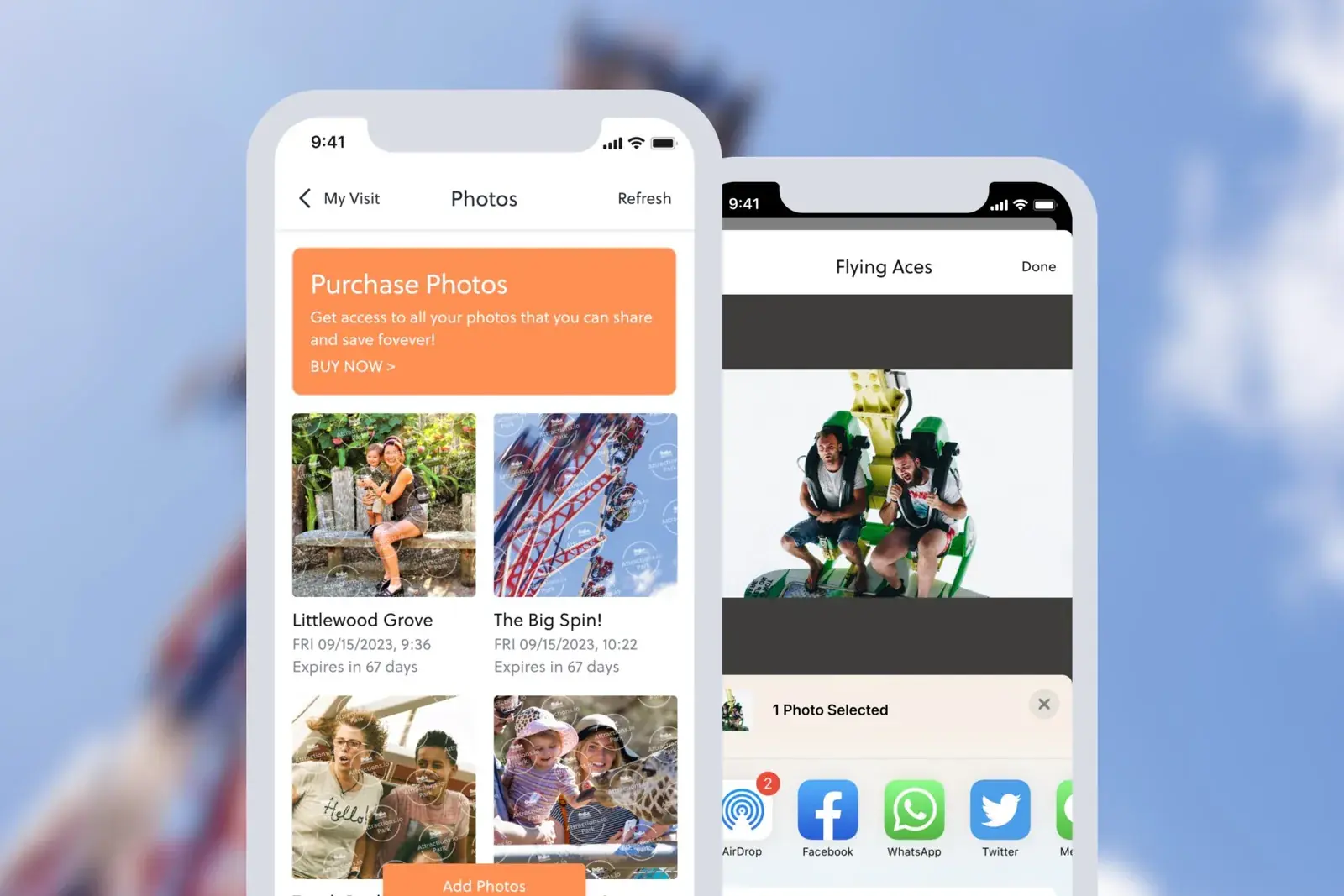
In-app photos connect your existing photo system to your app to do exactly that. Here’s how it works:
- Guests ride and have their photos taken. By the time they’re off the ride, their photos are ready.
- They link the photos to their app. Guests enter the code on their photo at the kiosk or scan an ID code. For roaming photographers, guests can collect a card to scan later.
- Their photos appear in the app. Every photo they’re in, from across the park, shows in one place, watermarked until it’s bought.
- They buy at their leisure. Guests can view their photos during the visit or at home, for months afterwards, and buy their favourites in a tap with the payment methods they already use.
- They download and share. Bought photos go straight to the camera roll, ready to post to social media or send to family.
“It’s about augmenting existing strengths (guest profiling, product engagement, behavioural demographics) with a new feature that increases the likelihood of commercial sales.” - Peter O’Dare, Head of Product at Attractions.io
No need to change your photo provider
A question we often hear is whether in-app photos mean replacing the photo system you already run. They don’t. In-app photos integrate with your existing photo provider and sync with your POS, so there’s nothing to migrate, and you can take payments through any method your payment processor supports.
Knoebels is a good example. Its app brought ticketing, ride photos and ride operations together without replacing any of the systems behind them, and the first app launched in eight weeks.
Turning photos into more revenue
Moving photos into the app does more than improve the guest experience. It opens up ways to sell more:
- More time to buy. Guests who aren’t ready at the kiosk can still buy later that evening or weeks after their visit.
- Reminders. Guests who haven’t bought yet can receive a personalised notification.
- Bundles. Multi-buy discounts and bundles for the whole day’s photos lift average basket size.
- Wider reach. Every photo a guest shares puts your brand in front of their friends and family.
Photo purchases also become part of the wider picture of each guest. On the Attractions.io platform, photo sales sit alongside tickets, food orders and everything else the app knows about each party. That means a photo offer can be timed like any other: shown to a family who have just come off the park’s signature coaster, or as they head for the exit, instead of broadcast to everyone.
Picture-perfect memories
The American author Eudora Welty once said, “A good snapshot keeps a moment from running away.” In-app photos make sure your guests don’t miss theirs.
They also give guests another reason to download your app. People want to see their photos before they buy, so anyone who hasn’t installed the app yet has a good reason to do it.
Want to see in-app photos in action? Book a demo.