
You’ve heard of “how long is a piece of string?” How about “how long does it take to build a mobile app?” Pinning down exactly when your app will be live isn’t easy, but it’s often one of the first questions operators ask us.
Here’s how long it takes to go from scoping to launch, and how the timings differ between a custom build and a ready-made platform.
What influences the development time of new apps?
Whether you’re building or buying your app, you need to agree your minimum viable product (MVP) before you can work out how quickly you can launch. Your MVP is an early version of your app with enough features to attract early adopters and start validating what guests need.
Eric Ries, author of The Lean Startup, advocates for an MVP because seeing what people do with a product is far more reliable than asking what they would do. In other words, it’s better to give guests a simpler version, see how they react and adapt, than to build a fully loaded app and be disappointed when guests use it differently from how you expected.
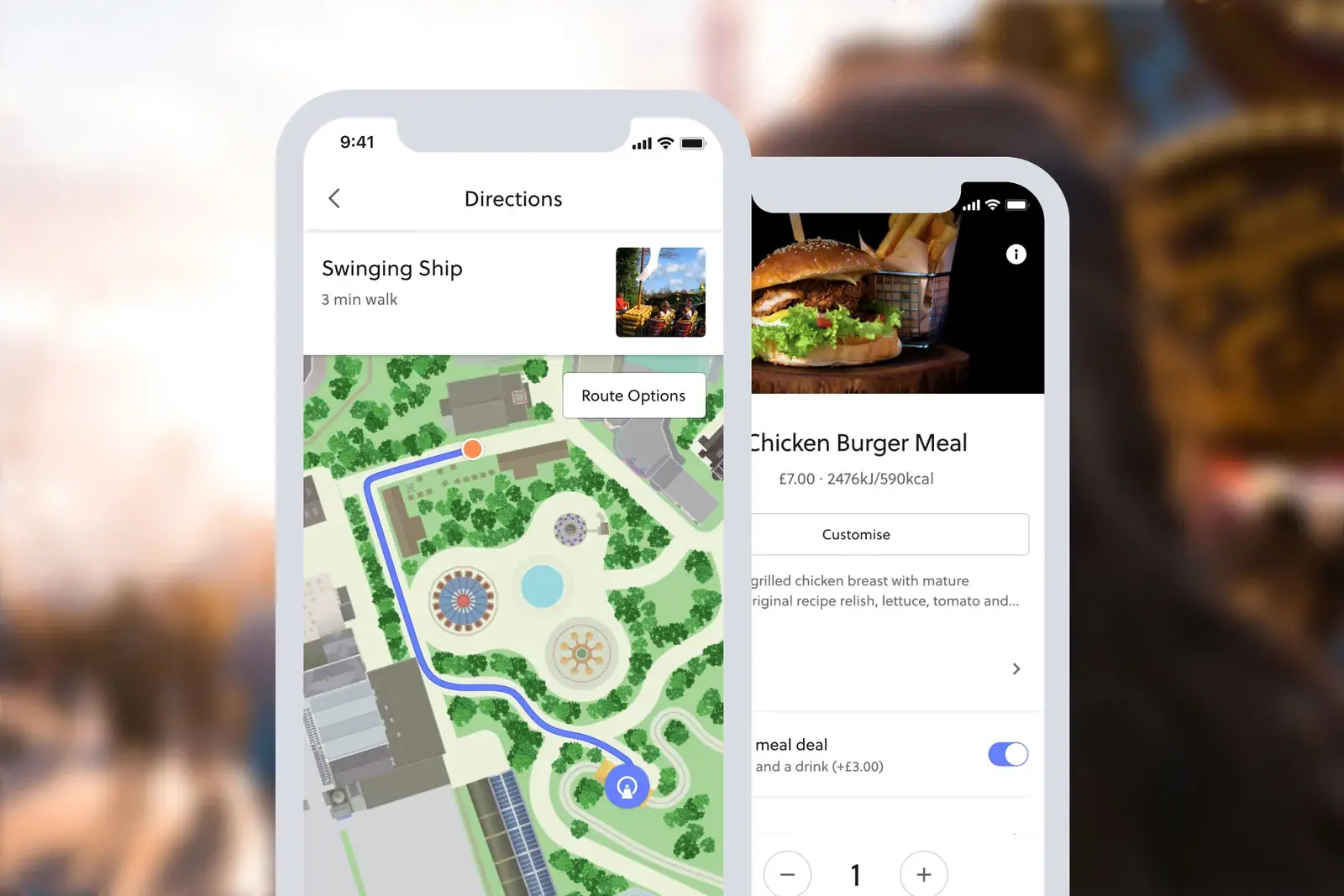
Every attraction’s MVP is different, but the leaner it is, the faster you’ll launch and the sooner you’ll see value. For example, launching with interactive wayfinding and adding more features later is more efficient than holding back your launch to go live with mobile food ordering, ticketing integrations and virtual queuing all at once.
Starting from scratch? The development process explained
Once you’ve decided on your MVP, you’re ready to bring your app to life. If you’re going down the DIY route, building your app could be as simple as opening your development environment, setting up the basic features, running a quick test and submitting it to the app stores in a few days. In theory!
In practice, a quick build is very unlikely to satisfy guests or help you hit wider goals like increasing secondary spend. A high-quality, enterprise-grade app takes time, and before you can build anything you need to research, scope, design and prototype. We asked our principal engineer James, who used to build apps as a freelancer, what timings he works to when developing an app from scratch.
Here’s what he told us:
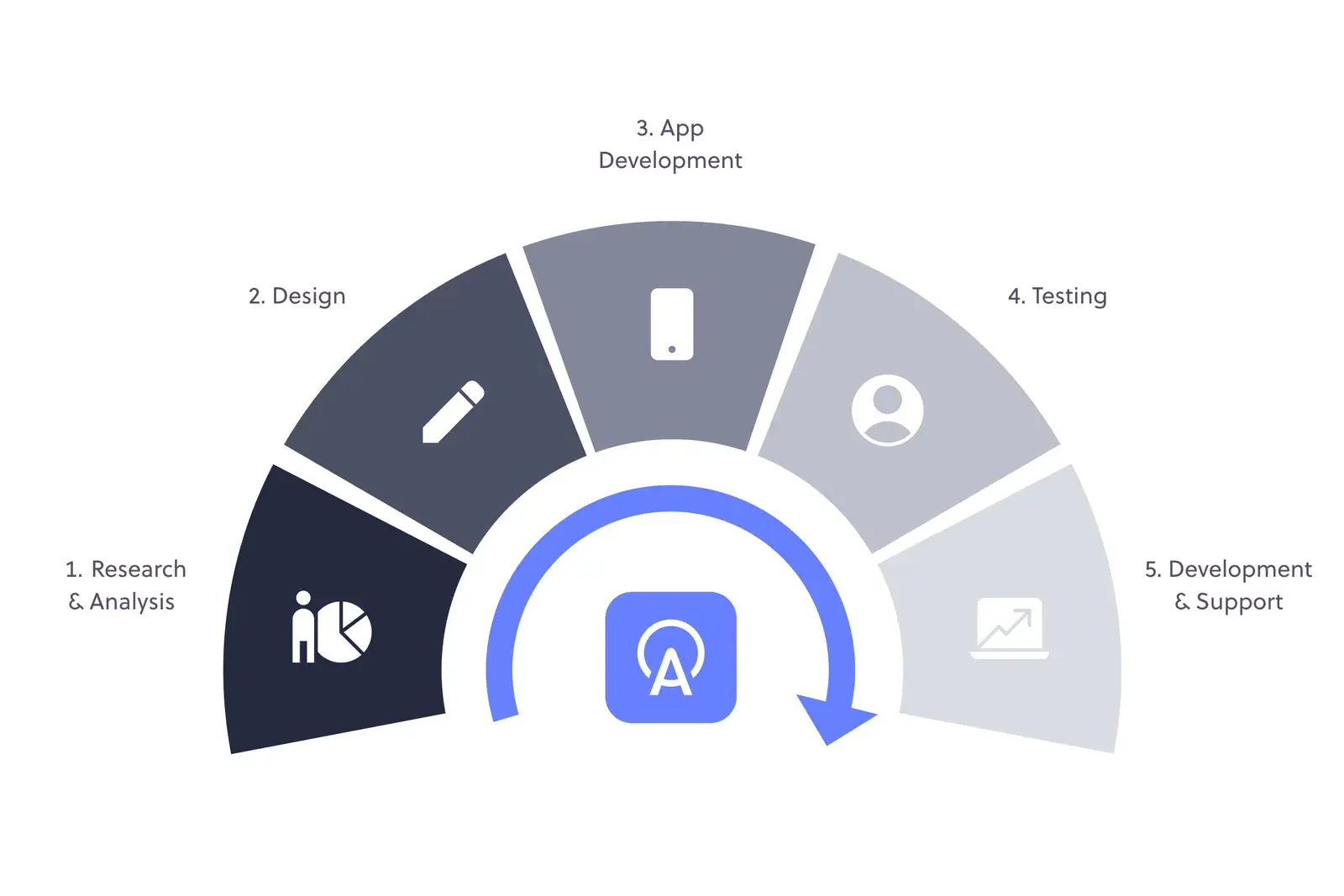
1. Research and analysis
During research, the team identifies requirements, forms the internal team structure and defines the early product roadmap. Expect this to take around two weeks.
2. Design
Next comes design. The team creates prototypes and wireframes to perfect the user interface (UI) and user experience (UX). Allow two to three weeks.
3. App development
The team builds the backend and the user interfaces. This is the most time-consuming part of the process and can take up to 10 weeks for a brand new project, depending on the MVP.
4. Testing
Testing is vital and not something to skip in a rush to launch. Allow two to four weeks for testing and fixes.
5. Deployment and support
Once the app passes QA, a beta may go to a select group of testers before the public release. Both Apple and Google need time to review new apps, which has to be built into your plan. Allow around three weeks for deployment.
On average, it takes a minimum of 20 weeks to build a new attractions app from first idea to live release in the app stores. It can be done faster (we’ve seen it done), but that’s the minimum to build something worthwhile, and in reality it often takes longer. From our conversations with partners and prospects, James’ timeline matches most agencies’ guidance for custom builds.
Want to launch faster? Here’s your alternative
If you want to get to market faster, there’s another route that doesn’t compromise on quality. A ready-made attractions platform like Go lets you launch a high-quality guest app far faster than the typical agency or DIY timeline. We’ve already done the hard work, using the development process above to build and refine the platform over more than 17 years. You choose the features you need, add your branding, and you have a branded guest app ready to launch.
You’ll also worry less about bugs. Our platform already runs at 200+ venues, including Butlin’s, Kennedy Space Center Visitor Complex and Knoebels, so it has been tested hard at busy venues. ROARR! Dinosaur Adventure runs at 99.9% uptime, and apps like Hunderfossen’s and Yorkshire Wildlife Park’s hold 4.8-star App Store ratings.
Go comes in three tiers. Go Starter is a web app guests open without a download, so there’s no App Store submission at all. The Go tier is a native iOS and Android app, and Go Enterprise adds deeper customisation and a dedicated team for large and global operators.
How long does it take to launch a branded guest experience app with Attractions.io?
We can launch a new app for your theme park, resort or zoo in around eight weeks. Knoebels launched its first app in eight weeks, with ticketing, photos and ride operations all integrated. As with building your own, you’ll still need to agree your MVP: we can get you to value sooner by launching a core app, then adding features in later releases. Most of our customers take this approach, because guest feedback at each stage shows which features to add next.
Here’s what a typical onboarding and launch looks like with Attractions.io:
Project kick-off (week 1)
When a new customer comes on board, we arrange a kick-off call with your delivery specialist, who manages the rollout of your app. We make sure everyone agrees on your goals and your guests’ needs before we start work on your branded app.
Delivery (weeks 2 to 4)
Our team sets up your branded app with the features agreed at kick-off, commissions your illustrated map and gives you access to Connect, our operator console, where you manage content.
Final review (weeks 5 to 6)
We give you a test app during delivery, then share a final release candidate so you can check the content and point of interest mapping and give us any last feedback.
Go live (weeks 7 to 8)
Once you give us the green light, we submit your app to the app stores on your behalf. As soon as they approve the listing, your app is out in the wild for guests to enjoy.
Ongoing support
After launch, your delivery specialist gives you access to our customer portals and introduces you to your customer success manager, who stays on hand to help you get the most from the product, make the most of your campaigns and roll out new features.
And that’s it: from idea to launch in around eight weeks, without tying up in-house developers. There’s a small upfront lift on your side, mostly content and approvals, and we take the technical work and vendor coordination off your team.
Here’s what we’ll typically need from you:
-
Attendance at the kick-off meeting and final reviews
-
Content: any offers, promotions, points of interest and featured content you want at launch, added through the operator console
-
Approvals for map illustrations, icons and the final app release before we launch
-
Onboarding and training: your delivery specialist will run a tailored training session to introduce you to the platform and help you get the most from your new app
So, how long will your theme park mobile app really take?
It’s not quite a piece of string, but it’s not far off. The time it takes depends on how complex your MVP is and which route you choose.
If you can’t wait to get your app into guests’ hands, a ready-made platform like Go will get a high-quality, enterprise-grade app live in less than half the time it takes to build a comparable app from scratch with an agency.
Ready to find out more? Book a demo and we’ll talk you through a launch plan for your park.