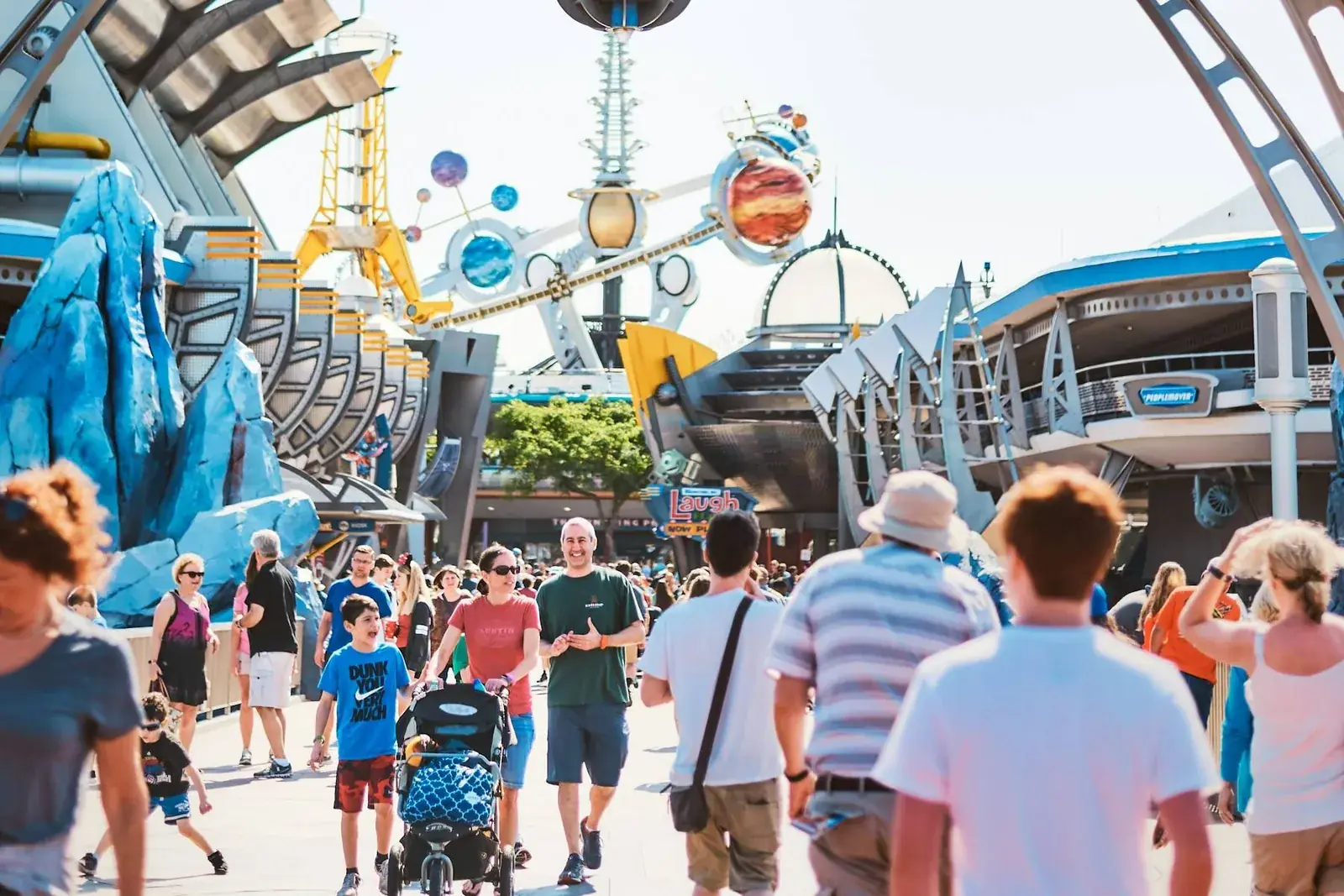
Disney Genie launched in late 2021 as a digital assistant inside the My Disney Experience app. In 2024 Disney retired the paid Genie+ name and replaced it with Lightning Lane Multi Pass and Lightning Lane Single Pass, but the ideas behind Genie (real-time information, personalised plans and paid queue access) are still how Disney runs its parks digitally.
You don’t need Disney’s budget to learn from what worked and what didn’t. Here is what fans, sceptics and industry watchers made of it, and what that means for your attraction.
How Genie and Genie+ worked
Genie and Genie+ were services offered to Disney Parks guests through the My Disney Experience mobile app.
The free tier of Genie was an itinerary planning tool. It gave guests a tip board with live ride wait times and a place to buy one-off queue upgrades, known in Disney terms as “Lightning Lanes”.
Genie+ was the paid layer. Prices varied by date and by park, and it gave guests access to priority queuing at selected rides. Guests picked a return time and skipped the slower standby line.
The older FastPass+ system had given guests up to three ride slots a day for free. Genie+ charged for the privilege and let guests book one slot every two hours. The Lightning Lane passes that replaced it in 2024 kept the paid model and let guests book some slots before they arrive.
What attractions can learn from Genie
From personalisation that delights guests to the risk of charging for something that used to be free, Disney’s digital journey with Genie holds plenty of lessons. Here are the four we think matter most.
Guests love being able to get real-time information in one place
“The ability to book fast passes and change them easily, check wait times, and plan your day in the park is the best!”
Reviews of the My Disney Experience app, like the one above, show a clear trend. Guests love seeing up-to-date information about their visit in real time, and for many it makes or breaks the day.
Queue times and ride status are a universal pain point. No one likes turning up at a ride to find an hour-long queue or a closed sign.
Sentiment analysis of guest experiences at one Disney park found the words “time”, “convenience” and “practical” came up again and again when guests reviewed its digital services.
Digital experiences work best when they make the day easier. Putting live ride updates and wait times in the same place as the map and the day plan is the simplest way to do that.
… And personalise their itineraries
Real-time data on its own is not enough. Disney’s app worked because it let guests build personalised itineraries that reacted to changing conditions.
By looking at where guests are in a park and what is near them, Genie could recommend nearby rides and shows that matched a guest’s interests and had a short wait.
That helps first-time guests find their way around an ever-growing park, and it helps repeat guests squeeze more into their day. One on-the-ground report from The Points Guy found that using Genie+ saved the writer more than three hours he would otherwise have spent queuing.
It pays off for operators too. A study published in the Journal of Tourism and Leisure Studies found that guests who use virtual queuing and personalised experiences spend 25% more than those who don’t.
This doesn’t surprise us. Personalisation is one of the things digitally native guests expect most, online and on-site. In our guest experience trends research, over 91% of people said they were more likely to choose brands that provide relevant recommendations during their visit. The Recommendation Engine in our platform does this job for attractions today. It’s an AI-powered recommendation system that uses each guest’s context and what is happening across the venue to suggest what they should see next, whether that is a ride, a show or a dining offer.

But they don’t love paying for a formerly free digital service
Not every Disney fan was happy when the free FastPass+ gave way to the paid Genie+. Within weeks of the October 2021 launch, 100,000 people had signed a petition calling for then Chief Executive Bob Chapek to go.
Genie+ inherited many of the problems of the free system before it, such as slots selling out quickly and inaccurate wait times. Plenty of Disney reviewers described it as “Not worth $15 on top of the already high ticket price.”
FastPass+ wasn’t perfect, but many guests felt Genie+ didn’t add enough to justify the extra cost. At launch, a single-day ticket cost between $109 and $159, and the average family spent around $4,700 on a typical Disney holiday. Extra fees on top of that are not something guests take lightly.
Research published in the Harvard Business Review shows that moving a free service behind a paywall can damage loyalty if it is badly timed or doesn’t come with a noticeably better product.
Or a new service that makes an old problem worse
Since Disneyland opened in 1955, Disney has had one problem across all its parks: queues.
Demand is close to endless. However many rides Disney builds, the rate at which guests arrive at popular attractions keeps outpacing the rate at which those rides can load them. Queues have been part of Disney parks since day one.
Disney has tried tiered ticketing, switchback queues and much more. It wasn’t until FastPass arrived in 1999 that it found something that seemed to work.
Invented by former Disney Parks vice president Bruce Laval, FastPass split the queue in two. Guests who booked a time could use a FastPass lane (today’s Lightning Lane) and walk almost straight on, while everyone else waited in the standby line.
FastPass created a virtual queue with slots allocated ahead of time. Pairing it with the physical queue kept rides full, and Laval told the New York Times in 2002 that FastPass had cut wait times by an average of 25% on participating rides.
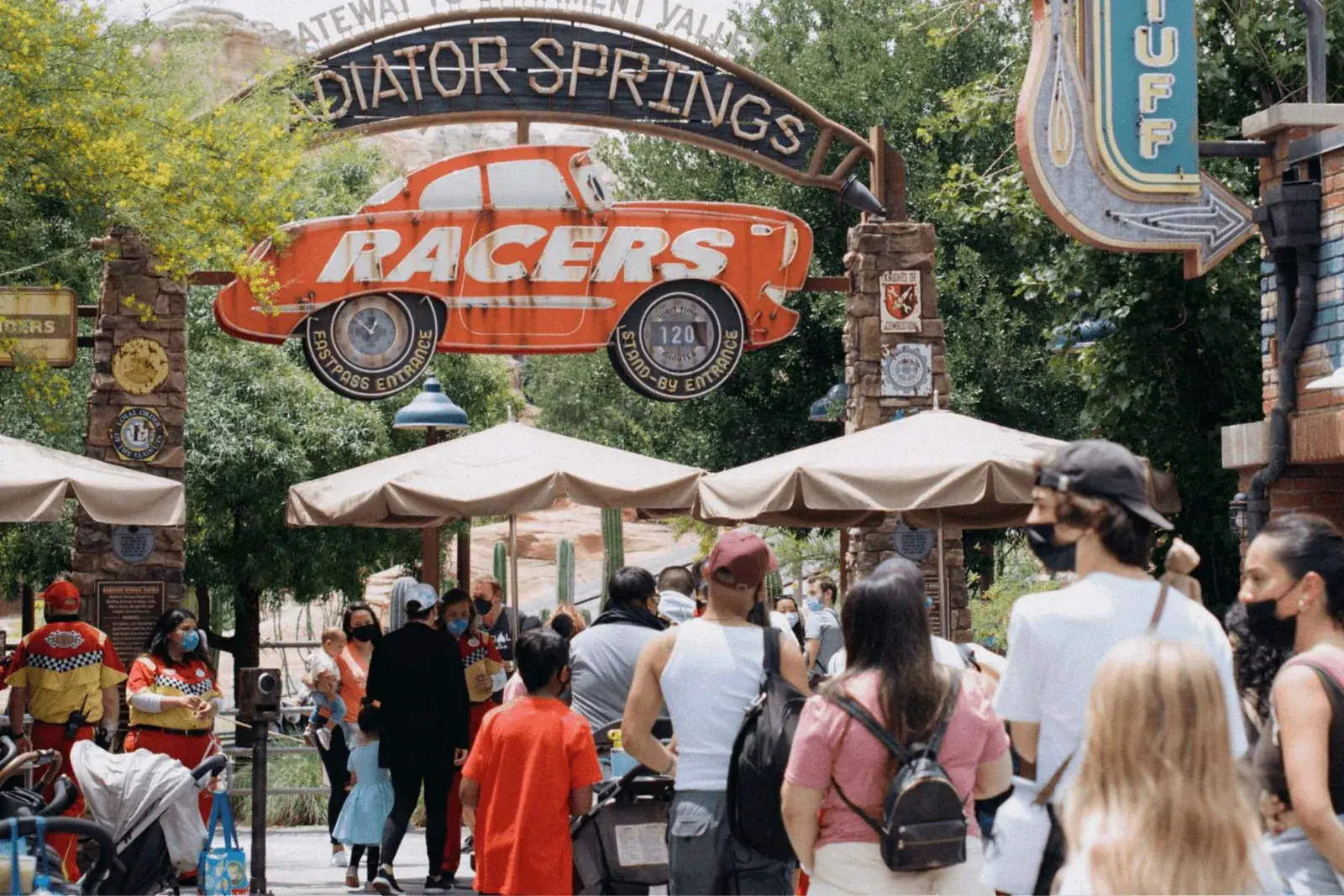
FastPass had its problems, though, and layering Genie+ on top of the same system made them worse. Kevin Perjurer’s Defunctland YouTube channel has a good video on this. In short, offering priority slots on more and more rides made it almost impossible to keep up with demand without squeezing standby guests. And, just as with FastPass, there are only so many slots at any time, so the more people buy priority access, the worse the queue gets for everyone else.
At busy times, one report found that over 93% of ride capacity went to Genie+ users. Many guests reported that booking at 7am, the earliest the system allowed, was the only way to be sure of a slot.
Final thoughts
Genie had some great features, but the less popular parts show that not everything Disney touches turns to gold.
Disney can get away with it. Demand for priority access is so inelastic that Genie+ was forecast to generate $300 million of extra revenue in 2022, and Disney parks went on to post record revenue in 2023. Most attractions don’t have that cushion. Learn from what Disney gets right, but don’t copy it wholesale.
The best digital projects bring operations and marketing teams together to build something better for everyone. Guests love technology that makes their day smoother, and they notice quickly when it gets in the way. That is the thinking behind our guest experience platform, and it is why we build real-time information, planning and recommendations for theme parks of every size.
If you’ve found this useful, sign up to our newsletter for more on the technology and trends shaping the attractions industry.