63% of guests say they’re willing to pay more for their tickets in exchange for a superior experience. Yet when we asked them about the technology they meet on a visit, most rated it as average. Moments of genuine delight were few and far between.
Those findings come from our Digital Guest Experience Report, researched with SSA Ventures. We surveyed more than 1,000 guests who had visited an attraction or resort across the US and Europe, and more than 200 attraction and resort operators, to compare three things:
- What guests want from technology at attractions
- What they actually experience today
- What operators plan to invest in over the next five years
What guests told us
The headline is simple: guests will pay more for better, and most aren’t getting it.
- 63% are willing to pay more for tickets in exchange for a superior experience
- Only 22% rated their digital experiences at attractions as “great”
- 30% said digital experiences are too limited
- Around a quarter found them difficult to access or locate
- 56% reported being disappointed or distracted by digital experiences
- 72% said digital experiences enhance their family’s satisfaction

Put those numbers side by side and the picture is clear. Guests value digital experiences when they work: nearly three quarters say good ones make the day better for their family. The problem is the average ones. Technology that’s hard to find, does too little or pulls attention away from the day leaves guests underwhelmed, and it leaves revenue on the table.
Why “average” happens
In our experience, average technology at attractions usually comes from two places.
The first is disconnected systems. Ticketing knows the booking, the till knows the spend and the queue feed knows the wait times, but none of them talk to each other. Guests end up with a separate tool for each job and nothing that brings their day together.
The second is sameness. When every guest sees the same map, the same schedule and the same noon lunch offer, the technology can’t respond to the family who arrived late, the couple who only want the big rides or the rain that’s just started. It’s functional, and that’s about it.
How to fix it
Closing the gap starts with making your technology work together around each guest.
That’s the idea behind guest orchestration. The Attractions.io platform connects the systems you already run to build a picture of each guest (their tickets, party and interests) and of your venue right now (queues, ride status, weather, show times). It then decides the most useful next thing for that guest and delivers it through their app, and it learns from what happens next.
In practice, that answers several of the complaints in the research:
- “Too limited”: one app covers the whole visit, from tickets and maps to food ordering, photos and offers.
- “Hard to find”: the content that matters to each guest surfaces on its own, so they don’t have to go looking.
- “Average”: two families on the same day see different suggestions, based on who they are and what’s happening around them.
There’s no chatbot to open and nothing extra for guests to learn. From their side it feels like an app that understands their day. Read more about how we use AI for the in-visit experience.
Watch the discussion
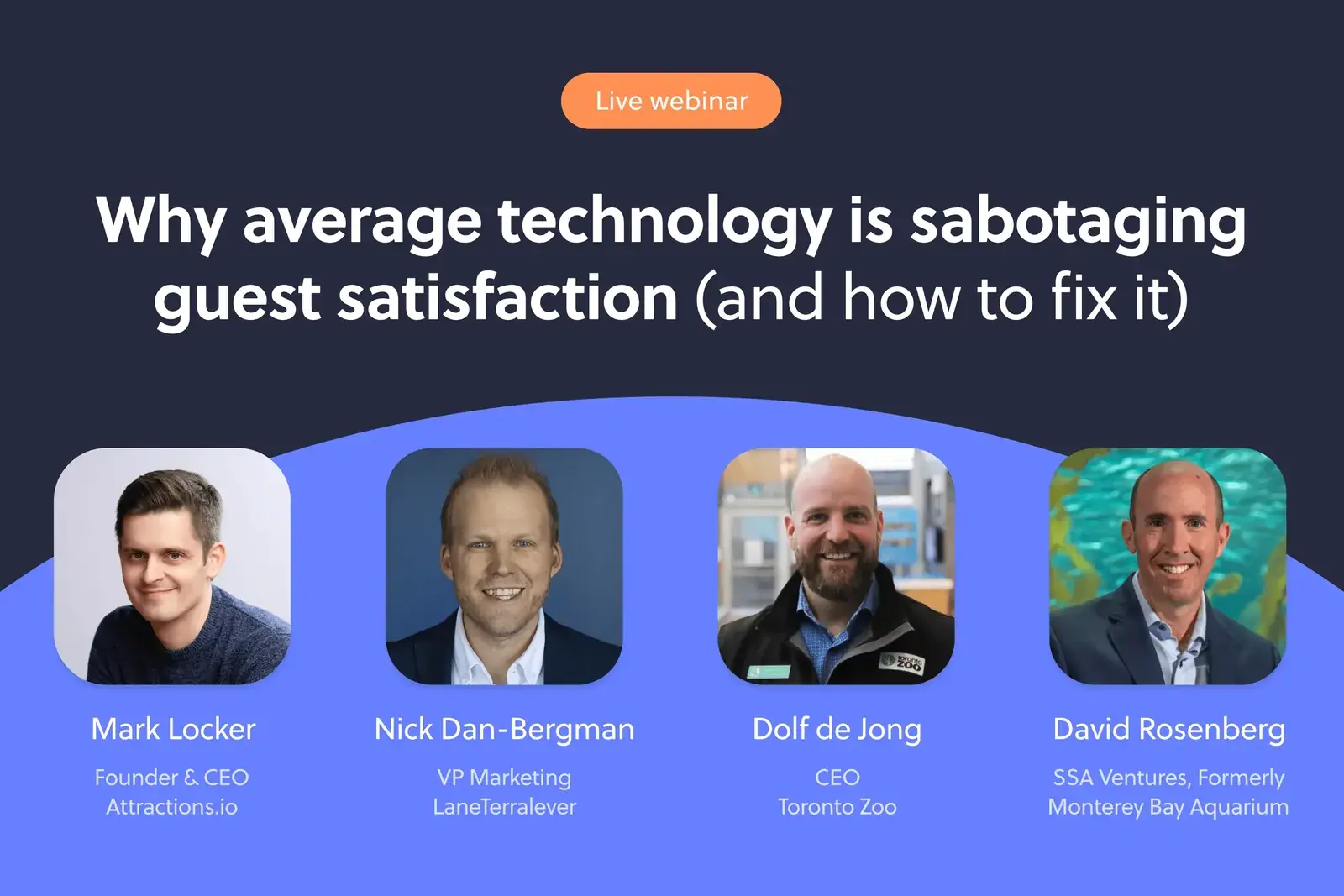
We shared the findings in a webinar with Mark Locker, our Founder and CEO, alongside Dolf DeJong (Toronto Zoo) and David Rosenberg (SSA Ventures, formerly Monterey Bay Aquarium). The panel talked through what guests want from attraction technology now and in the future, how that lines up with operators’ plans for digital transformation and where technology fits into the visit to exceed expectations and drive revenue.