

It's a tough time to run an attraction. Margins are tight, growth is harder, and guests have more choice than ever. When you can't rely on more people through the gate, growth has to come from getting more value from every guest you already have. That comes down to one thing: understanding your guests and your venue. Not just what ticket they bought, but who they are, where they are, what they've done, who they're with, and what's happening around them — and then using all of it to make their next moment better. A guest who feels understood spends more, comes back, and brings friends.
Until now, most attractions simply haven't been able to. You know there's more value in every visit, but the data you'd need is scattered across systems that don't talk, you don't have the team to pull it together, and there's no way to turn it into action.
AI changes all three. It can reason over everything happening with a guest and across your venue, so scattered data finally becomes usable. It doesn't require segments or pre-planned campaigns, which means no specialist team is needed to manage them. And it can act in the moment, not in tomorrow's email. For the first time, genuine one-to-one personalisation is within reach and it turns into more conversions, more upgrades and more repeat visits. In this guide, we'll show you what you need to get started.


A brilliant host would have seen it coming. Pointed her somewhere dry and fun, maybe nudged her toward lunch or the indoor show. But no one can watch over every guest like that. So Jenny drifts and heads home early.
She'd have stayed longer and spent more if she'd known what other activities were available that afternoon. The makings of a better visit were all there. You just had no way to act on them while she was still with you.

You've already invested in ticketing, a CRM, POS, digital signage, maybe more. Some of those systems know about your guests: who they are, what they've bought, who they're with. Others know about your venue: what's open, how busy it is, today's weather.
But when they don't talk to each other, you can't determine the next best moment for that guest. So you miss on two fronts: their visit isn't as good as it could be, and they spend less than they might have.
Until now, that someone was a person: defining the segments, mapping the journeys, writing the rules, running the tests. Even when your data is joined up, it's slow, broad work; and never truly one-to-one. Today, AI can do that reasoning itself. It absorbs the full picture, weighs the live situation, and works out the best thing for that one guest. This is what we call Guest Orchestration.


The easiest way to do this is to ask for consent as guests sign up for your app or book online. Then your CRM can capture and recognise them as an individual.
.webp)
.webp)

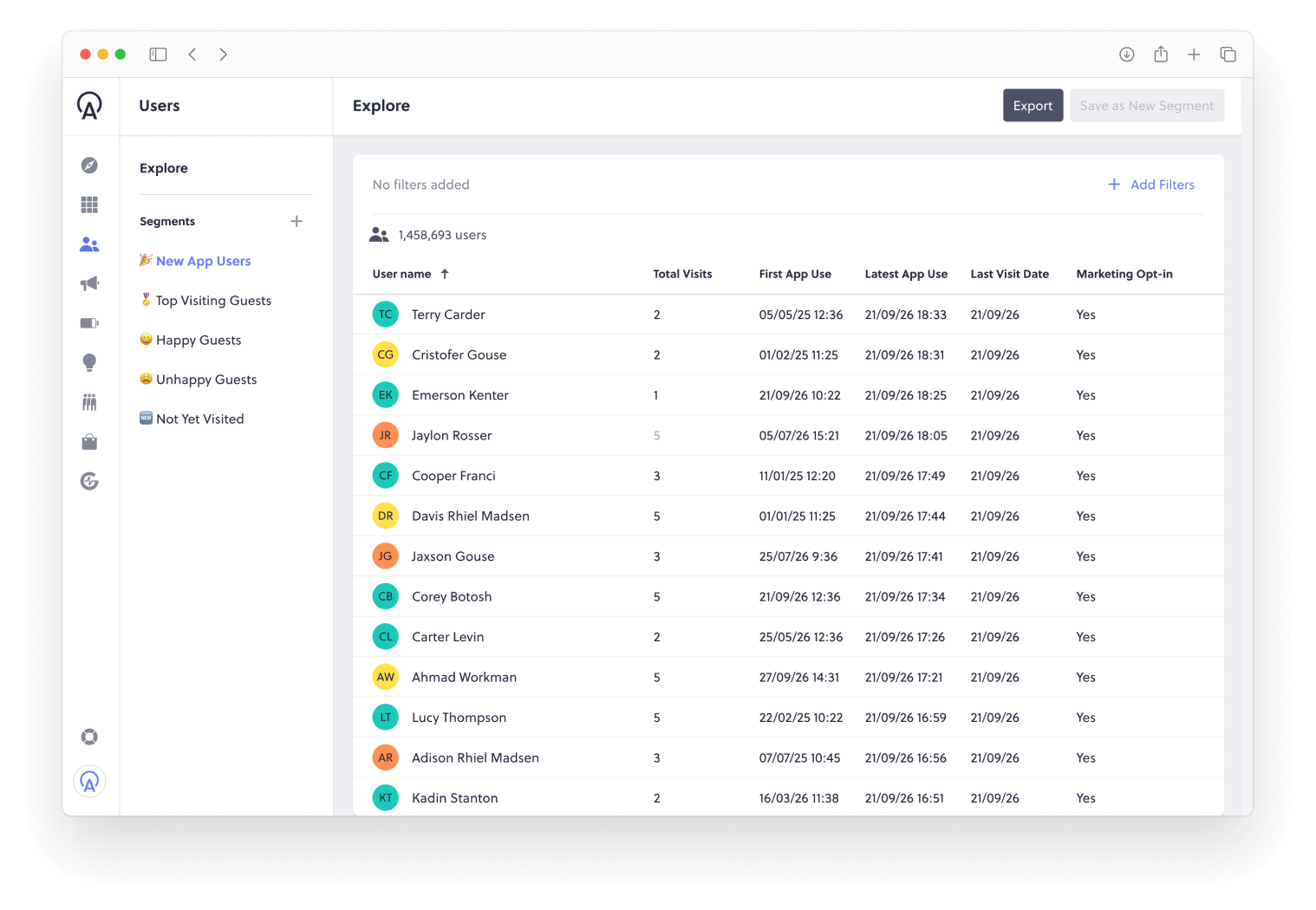
On their own, these signals sit scattered. Stored together, they form a complete picture of your venue and guest. The goal is to have everything in one place: what you know about each guest, tied to their unique identity, and what's happening across your venue.

And that needs to happen in the moment. You need to reach guests while there's still time to make their day better. That might be an app, an SMS or another tool that they can engage with whilst still on site.


