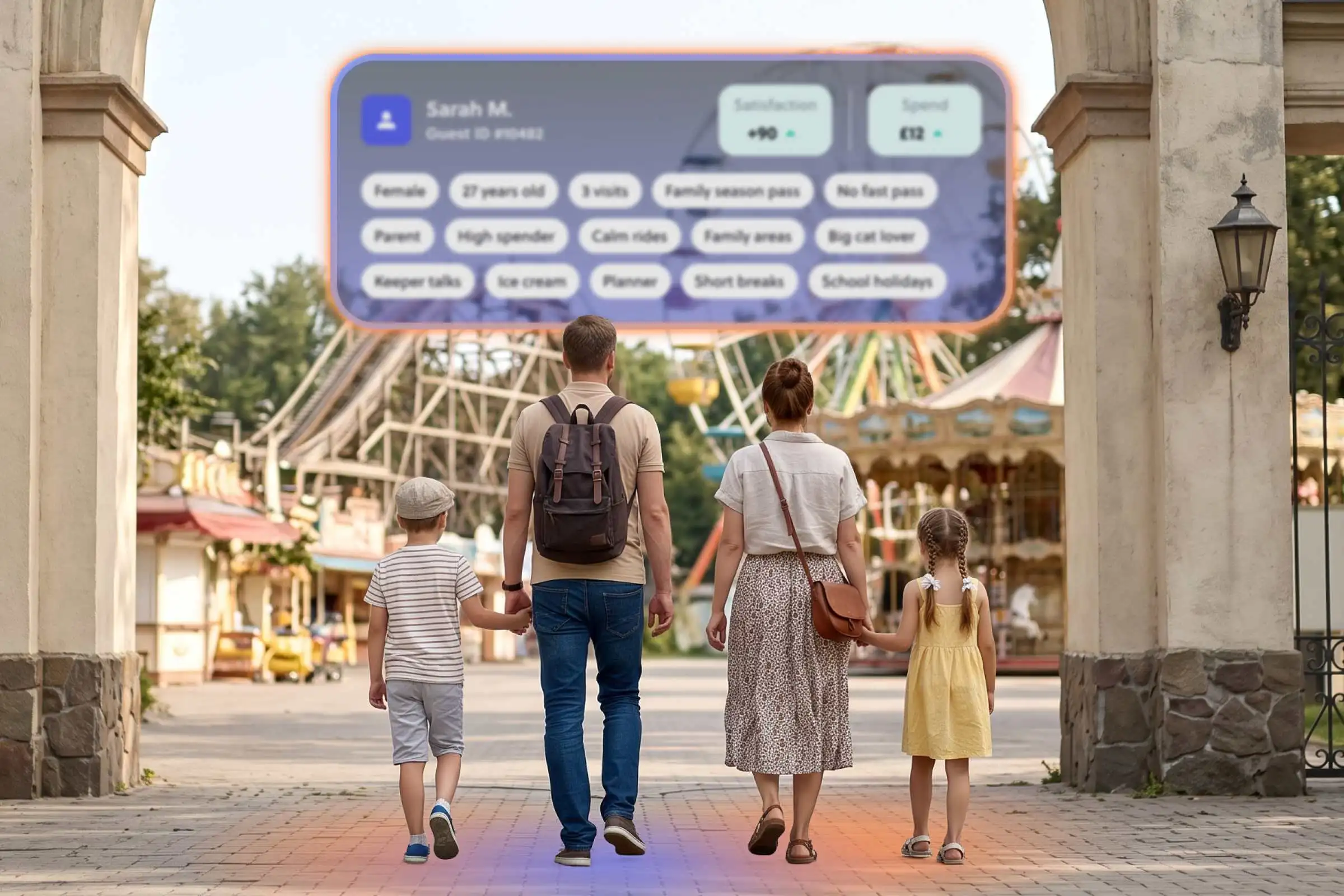
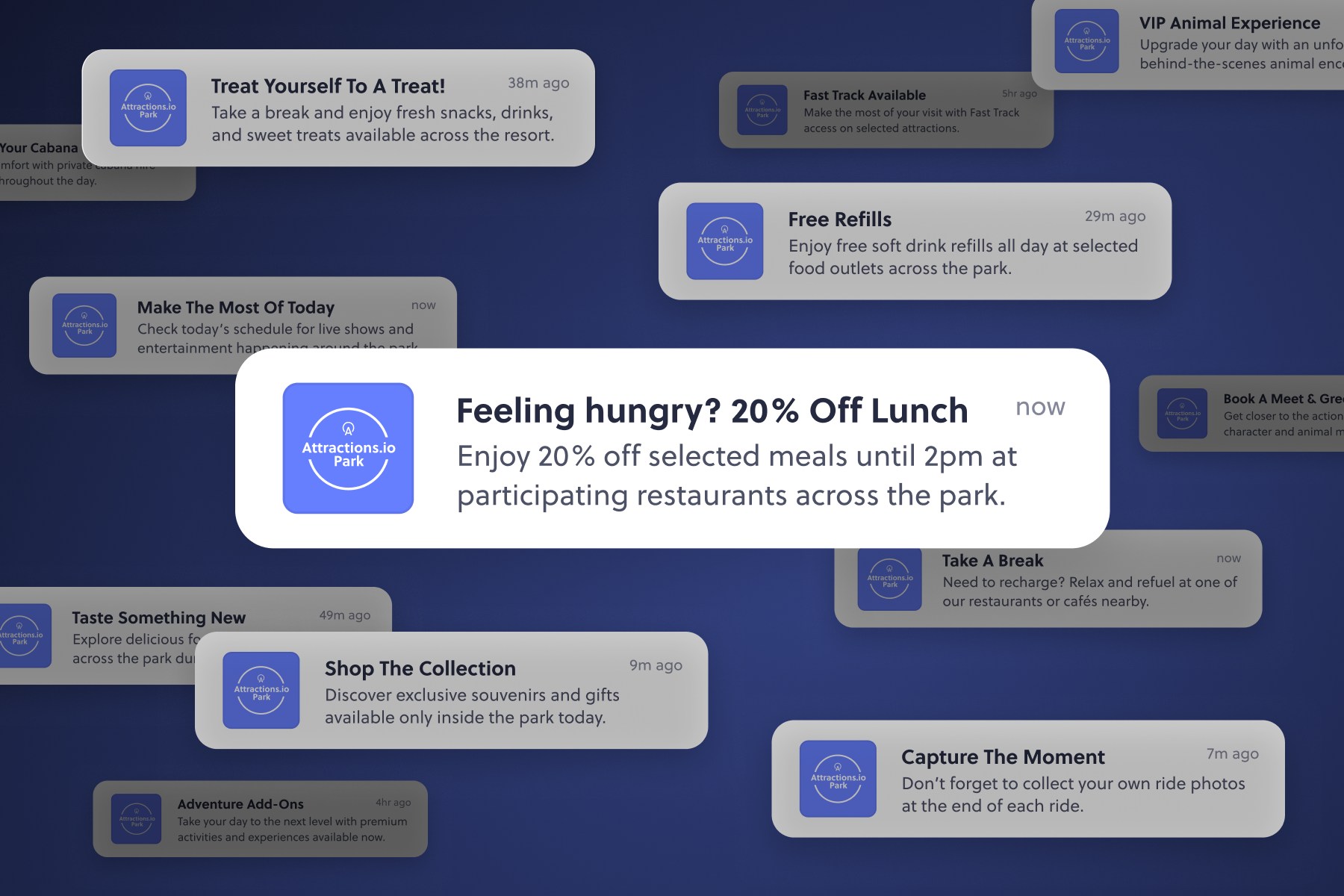
Here's how most attractions approach on-site marketing today:
Before the visit, you send a warm-up email: maybe a countdown, maybe a "top tips for your day" feature. Once on-site, there's static advertising, a printed map, and if you already have a mobile app, maybe a handful of scheduled push notifications.
"Lunch special at 12 pm!" goes out to everyone at 11:45 am, regardless of whether they've already eaten or they're on the other side of the park.
Post-visit, there's a feedback survey and retargeting emails begin a week later.
Sound familiar? It should.
It's the campaign loop the industry runs on:
Book tickets → schedule warm-up campaign → send the same content to everyone → measure periodically → repeat. And for pre-visit marketing, where guests are browsing at their own pace to book a ticket, it delivers.

The problem is that the campaign loop was designed for evening sofa browsing. During the visit itself, when guests are in your venue, spending money, creating memories, deciding whether to come back, workflow-based campaigns can’t drive in-the-moment engagement.
Why? Because a live attraction isn't an inbox. Context changes by the minute, and the campaign you planned last Tuesday can't keep up with what's happening right now.
Context changes faster than campaigns can. Weather turns. A ride goes down for maintenance. Queues spike unexpectedly. That single fast track promo you scheduled for 2 pm? It's irrelevant if it started pouring down at 1:45 and the ride closed. Campaign logic simply can't account for conditions on the ground because it was set up days ago.
Segments don't adapt in realtime. Even the most forward-thinking operators, who already segment guests into groups like "family with young children" are only describing who the guest is, not where they are right now, what they enjoy, or what's happening around them. And most venues haven't got that far; they're sending the same content to everyone.
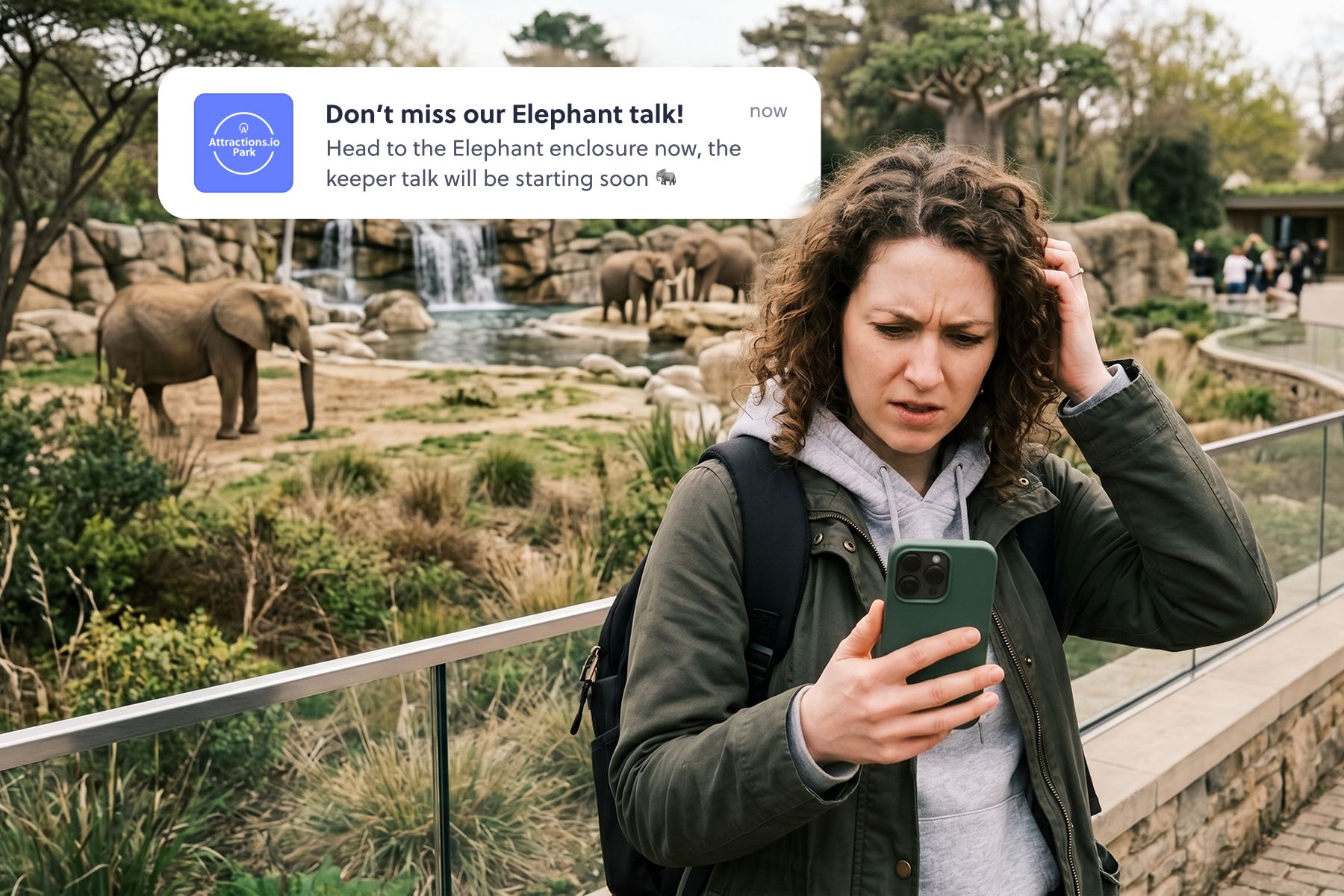
Batch delivery creates diminishing returns. A blanket "Don't miss our elephant talk!" sent to everyone at the same time, regardless of where they are or what they're doing, is just noise. And guests will tune out quickly when messages don't feel relevant to them. 46% of mobile users will opt out of push notifications after receiving just two to five generic messages per week.
As Forrester's research on moments-based marketing puts it, traditional campaign strategies are "famously inflexible and require planning months in advance." They were built for e-commerce, where the customer browses at their own pace and context stays relatively stable. In a live venue, that assumption simply doesn’t hold.
This is where the mental model needs to shift. Instead of planning what to say to a segment, imagine responding to what each individual guest needs at this moment.
We think of it as the difference between the campaign loop and the moment loop.
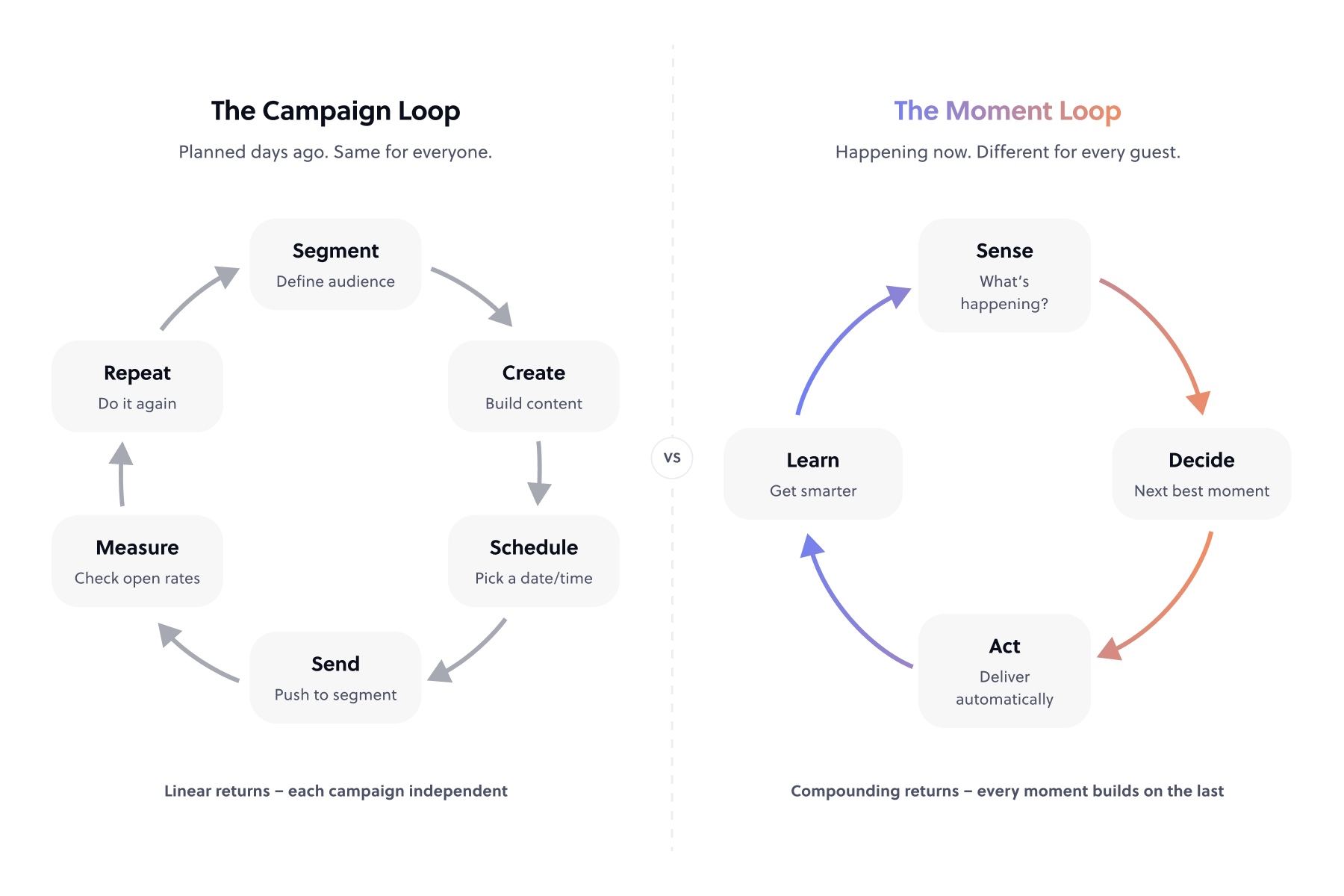
The campaign loop looks like this: Segment → Create → Schedule → Send → Measure → Repeat. It's circular, planned, and the same for everyone in that segment.
The moment loop works differently: Sense → Decide → Act → Learn. Continuously, for every guest, all day long.
Sense means understanding what's happening around each guest right now: their location, the weather, current queue times, what they've already done today, who's in their party.
Decide means determining the next best thing for this specific guest at this specific time. Not the next campaign. The next helpful moment.
Act means being able to actually deliver the next best moment, automatically, through a channel the guest is already using, like their phone or smart watch, without a marketer pressing "send."
Learn means every interaction feeds back into the system, so the next decision is smarter. Moments compound; campaigns just repeat.
Here's what that looks like in practice.
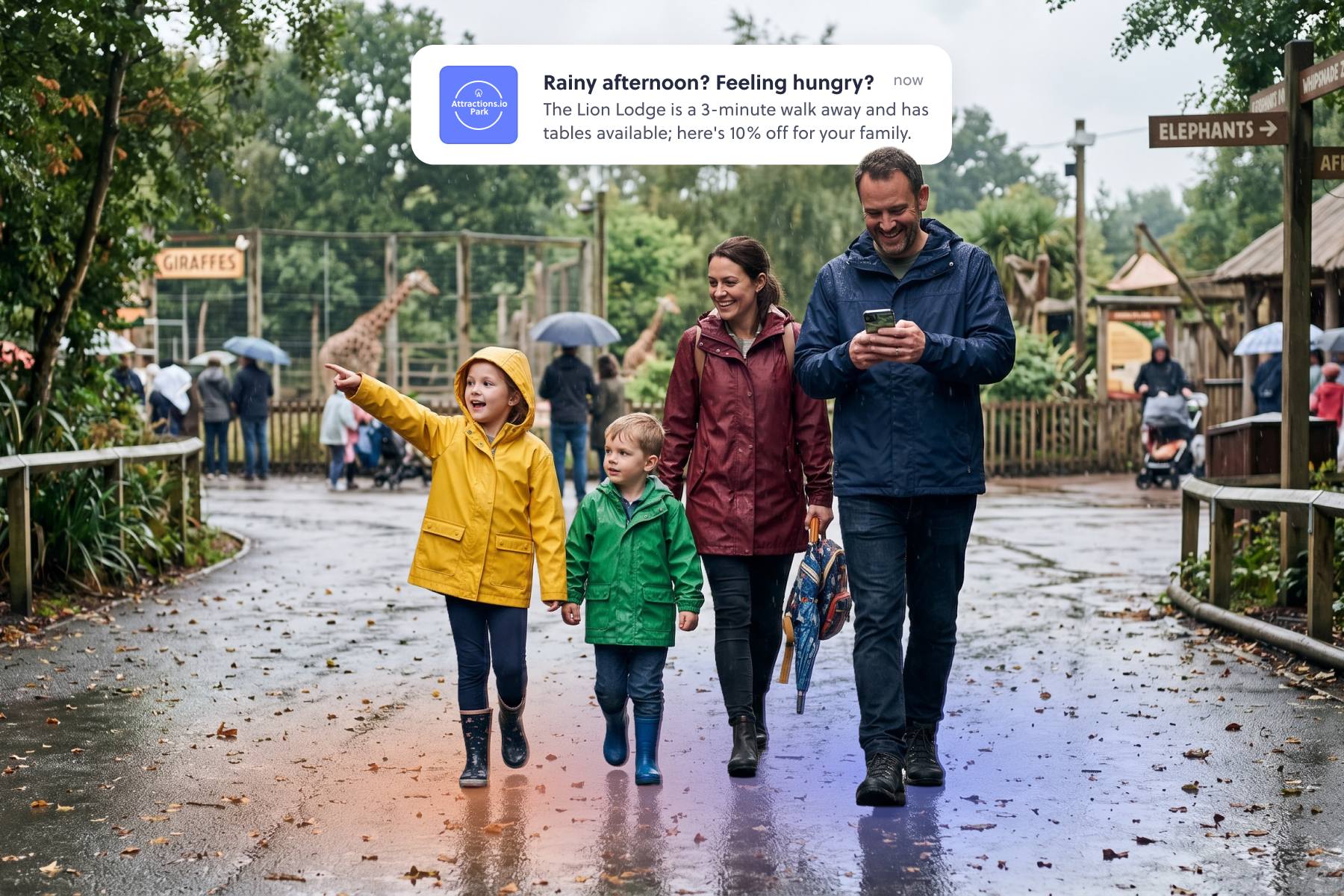
It's 1:45 pm on a Saturday. A family of four has been in the park since 10 am. They haven't eaten yet. The ride nearest to them has just gone down for maintenance. It's starting to drizzle.
A campaign-driven system has nothing to say. The lunch push went out to everyone at noon. The ride closure notification hasn't been set up yet. The weather? Nobody's updating it in real time.
A moment-aware system can anticipate the convergence of signals. Hungry, disappointed, weather turning. And surface something relevant and timely: "Rainy afternoon? Feeling hungry? The Lion Lodge is a 3-minute walk away and has tables available; here's 10% off for your family."
That's a moment - the kind of intervention that turns a frustrating afternoon into a positive memory.
Pre-visit campaigns still matter for driving ticket sales and building anticipation. But if your on-site strategy is just an extension of that same campaign playbook, there's a gap between what your guests currently experience and how great their day could be.
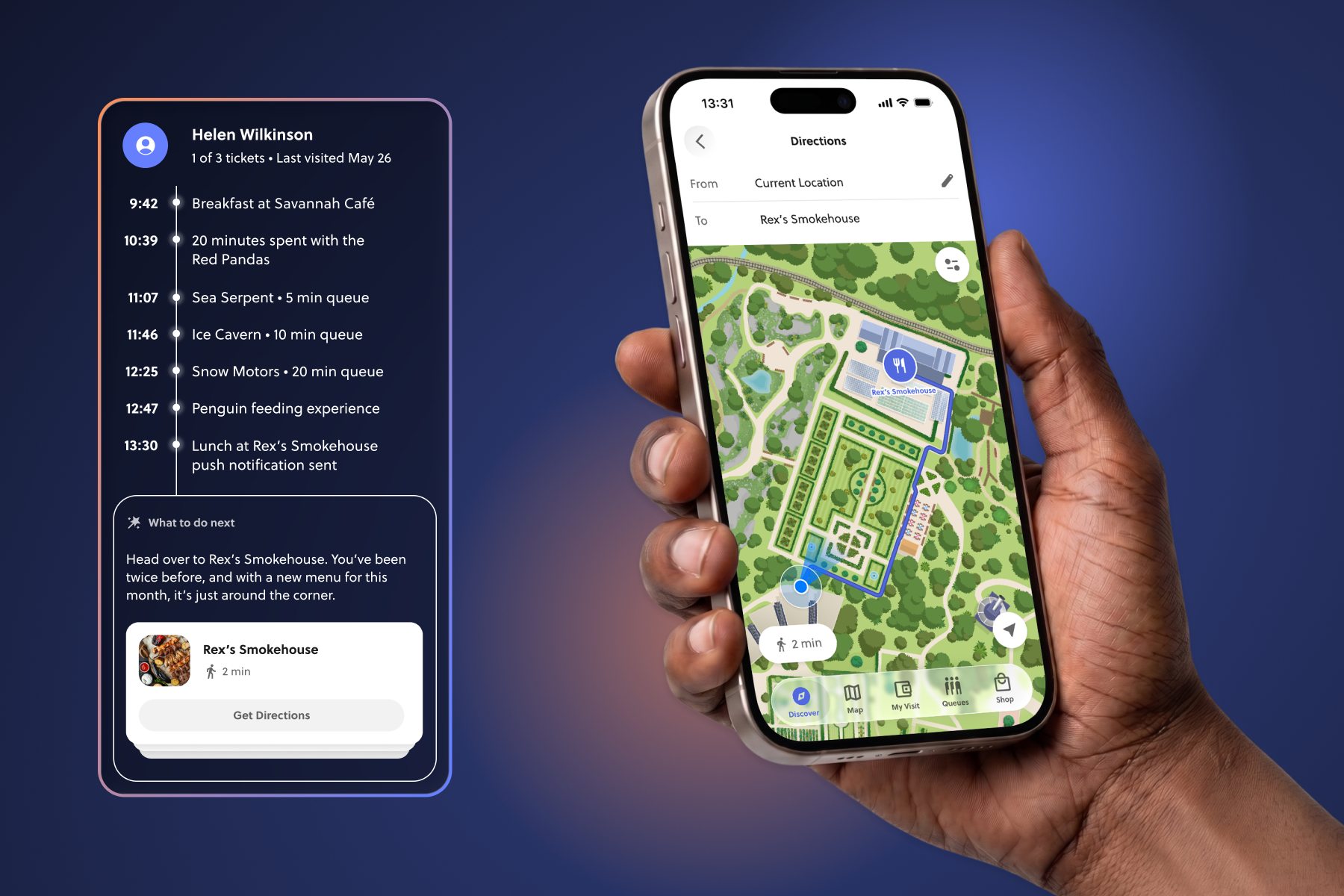
The mental shift is: pre-visit, you're optimising campaigns. On-site, you’re optimising moments. That means moving to thinking "what does each guest need right now?" and at the same time, accepting that no human team can make those decisions at scale across a full operating day.
That's where AI makes possible: the ability to ingest live signals and make per-guest decisions in real time, thousands of times a day, without your team configuring each one.
This is the shift we're building towards at Attractions.io: moving from broadcast campaigns to in-the-moment orchestration, where every guest gets a personalised experience based on who they are, where they are, and what's happening around them. We'll be unpacking what this looks like in practice over the coming weeks — we'd love you to follow along.
This is part of our series on rethinking guest engagement. Read our previous article on X, or explore how to personalise your experience for every guest.


.jpg)